

 Nov 19, 2026
 3 min read
Ask ten players what separates a winning session from a losing one and you'll get ten different answers. Some will swear it's the algorithm. Others point t
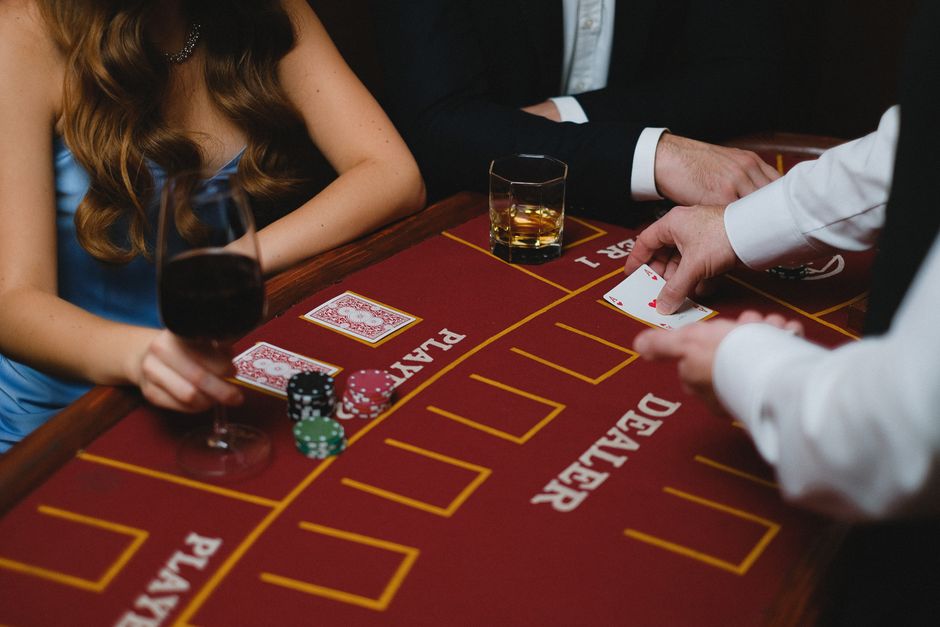
Ask ten players what separates a winning session from a losing one and you'll get ten different answers. Some will swear it's the algorithm. Others point to hot streaks, cold decks, or the vague notion that the site "has it in for them." The truth is messier — and far more interesting. Every vertical in iGaming sits somewhere on a spectrum between pure chance and genuine skill, and understanding where each game falls changes how you play, how you budget, and frankly, how much you enjoy the whole thing.
Let's get this out of the way: slots are almost entirely luck. Modern video slots run on Random Number Generators that cycle through thousands of outcomes per second. Your spin doesn't care about the last twenty spins, the time of day, or how long you've been sitting at the machine. Each result is independent.
What separates a thoughtful slots player from a button-masher isn't luck manipulation — it's volatility management. Two slots can share the same RTP (say, 96%) but behave completely differently:
The practical tip: match the slot's volatility to your session budget, not to your mood. If you're playing with $20, a high-volatility slot with a $1 minimum bet gives you just 20 chances. That's a lottery ticket, not entertainment.
Table games are where the skill spectrum starts to widen. Roulette, for all its drama, is a fixed-odds game. No betting system — Martingale, Fibonacci, whatever the YouTube gurus are pushing — changes the house edge. A European wheel with a single zero sits at 2.7%. An American wheel with double zero nearly doubles that to 5.26%. That's the only number that matters long-term.
Blackjack is different. Basic strategy — a chart of mathematically optimal plays for every hand combination — can push the house edge down to roughly 0.5% on a good ruleset. That's not a gimmick. It's arithmetic. A player who hits 16 against a dealer's 10 and a player who stands are making decisions with measurably different expected values.
Here's how skill actually layers up in blackjack: It is also worth checking สล็อต before deciding.
Notice that the skill isn't about beating the dealer. It's about losing slower and capitalizing on the rare favorable situations.
Poker is the odd one out because your opponent isn't the house. The rake — typically 5% capped at a few dollars per pot — is the only built-in edge the operator has. Everything else is a contest between players, and that's why poker is the most skill-dominant game in the entire iGaming ecosystem.
Good poker players win over time not by getting lucky but by making fewer mistakes than their opponents. That means:
A skilled micro-stakes grinder can sustain a win rate of a few big blinds per hundred hands over thousands of hands. That's proof the skill is real — and that the sample size required to prove it is enormous.
Sports betting sits awkwardly between the two ends. If you're throwing money on a parlay because you like the team colors, you're playing a lottery. If you're line-shopping, tracking closing odds, and exploiting soft lines before they correct, you're doing something closer to investing.
The bettors who grind out long-term profits tend to operate like analysts. They look for discrepancies — a bookmaker pricing a team at +150 when sharp books have it at +120. That 30-cent gap is the edge. It's small, it requires volume, and it demands that you treat your bankroll as a business expense rather than a weekend treat.
For the recreational bettor, the takeaway is simpler: bet less on accumulators, more on singles, and never chase a loss by doubling up on the next game. The math doesn't forgive that.
Every game on this list involves variance, that uncomfortable gap between expected value and actual results. A blackjack player with a perfect strategy can lose ten hands in a row. A pocket aces can be cracked by 7-2 offsuit. A slot can pay 500x on your first spin and eat the next 400.
The players who last aren't the ones who “feel lucky.” They're the ones who understand that short-term results are noise and long-term results are signal. If you play a 99% RTP game for an hour, you might end up 40% down. If you play it for a year, the probability of being near that 1% expected loss becomes overwhelming.
This is also why chasing losses is so dangerous. The math doesn't care that you're "due." Slots don't owe you anything. Poker tables don't reward persistence without adjustment. Blackjack charts don't adjust for your mood. The only variable you control is your decision-making, and the only way to make that count is to keep learning and keep records.
Here's what I'd tell any player getting into iGaming today: figure out where your game sits on the chance-to-skill spectrum, then train the skills that are actually available to you. Slots — pick the right volatility and accept the rest as entertainment cost. Table games — learn the optimal charts and stop believing in systems. Poker — study ranges, position, and psychology, because your edge lives entirely there. Betting — treat it like pricing research, not sports fandom.
The mistake most players make is treating every game the same way. They apply poker intuition to slots and slot expectations to blackjack, then wonder why nothing ever feels sustainable. Match your mindset to the math. Do that consistently, and the casino becomes what it should have been all along — a game you genuinely understand, rather than one that just happens to you.
Provide clear contact information, including phone number, email, and address.

This post covers tips on color schemes, fonts, and visuals to keep your profile visually appealing and cohesive.
 Sep 23, 2026

Gen Z is reshaping digital interaction. Learn what matters to this generation and how to create authentic, meaningful content.
Sep 20, 2026

Gen Z is reshaping digital interaction. Learn what matters to this generation and how to create authentic, meaningful content.
Sep 15, 2026
Unlock the tools and insights you need to thrive on social media with Orchard Cedar. Join our community for expert tips, trending strategies, and resources that empower you to stand out and succeed.

Orchard Cedar is your hub for the latest in digital innovation, technology trends, creative insights. Our mission is to empower creators, businesses, valuable resource.
© 2026 The Grafted Branch. All rights reserved.


Tags
Matthew Kuhnemann
8/2/2024
“I love how this breaks down the importance of consistency and authenticity. It's easy to get caught up in trends, but staying true to yourself really is key. Great read!"